5 Simple Sleep Hygiene Tips That Work in 24 Hours: Your Guide to Better Rest Tonight
Do you ever feel like you’re running on fumes, dragging yourself through the day despite trying everything to get a good night’s sleep? The frustrating cycle of restless nights and groggy mornings can impact everything – your mood, focus, energy levels, and even your overall health. If you’ve tried counting sheep, meditation apps, or expensive supplements with little success, it might be time to look at the fundamentals.
The good news? You don’t need a complete overhaul to start sleeping better. Often, it’s the small, consistent changes that make the biggest difference. We’re talking about sleep hygiene – a set of simple practices that optimize your environment and habits for deep, restorative rest. And guess what? Many of these tips can start working their magic in as little as 24 hours. Get ready to discover 5 simple sleep hygiene tips that work in 24 hours to help you wake up feeling genuinely refreshed, starting tomorrow morning.
Key Takeaways
- Sleep Hygiene is Key: It refers to habits and environmental factors that promote quality sleep. Small adjustments can yield significant results quickly.
- Establish a Consistent Routine: Going to bed and waking up at the same time daily, even on weekends, profoundly impacts your body’s natural sleep-wake cycle.
- Optimize Your Sleep Environment: Making your bedroom dark, cool, and quiet signals to your brain that it’s time for rest, enhancing the depth and quality of your sleep.
What Exactly Is “Sleep Hygiene,” and Why Does It Matter?
You might hear the term “sleep hygiene” and imagine scrubbing your mattress, but it’s much more about your habits and environment surrounding sleep. Think of it as preparing your body and mind for optimal rest, much like personal hygiene prepares your body for the day.
Sleep hygiene encompasses a range of practices that are essential for good sleep quality and full daytime alertness. It involves both:
- Behavioral Habits: Things you do (or don’t do) during the day and in the hours leading up to bedtime.
- Environmental Factors: The conditions of your bedroom that either encourage or hinder sleep.
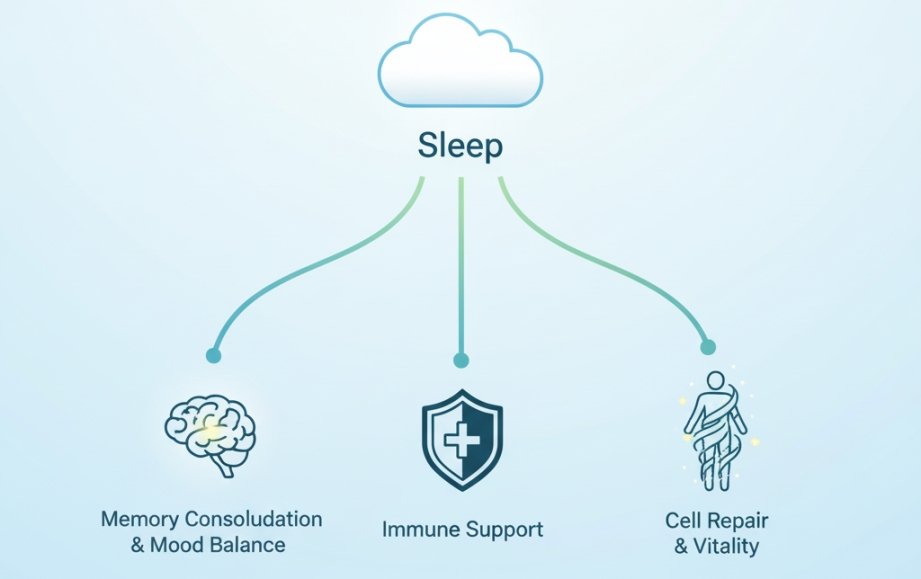
Why does it matter so much? Because sleep isn’t a luxury; it’s a fundamental pillar of health, as crucial as nutrition and exercise. During sleep, your body performs vital functions:
- Cell Repair and Regeneration: Your body literally rebuilds itself.
- Hormone Regulation: Key hormones that control appetite, stress, and growth are balanced.
- Immune System Support: Sleep strengthens your body’s defenses against illness.
- Memory Consolidation: Your brain processes and stores information from the day.
- Emotional Regulation: Quality sleep helps manage stress and mood.
When your sleep hygiene is poor, these processes are disrupted, leading to that familiar tired, irritable, and unfocused feeling. The good news is, unlike chronic sleep disorders, poor sleep hygiene is often easily fixable with a few strategic adjustments. And many of these adjustments can start making a difference in how well you sleep tonight, meaning you’ll feel better in 24 hours.
The Immediate Impact: Why These Tips Work So Fast
The beauty of good sleep hygiene is its powerful and often immediate effect. Unlike dietary changes or exercise routines that take weeks to show noticeable results, optimizing your sleep environment and bedtime habits can literally transform your night’s rest, sometimes within a single 24-hour cycle.
Here’s why these tips are so quick to deliver:
- Directly Influencing Circadian Rhythm: Your circadian rhythm is your internal 24-hour clock. When you introduce consistent sleep/wake times or control light exposure, you’re directly signaling to this clock, helping it get back on track rapidly.
- Hormonal Reset: Light and darkness significantly influence melatonin (your sleep hormone) and cortisol (your stress/wake-up hormone). By managing these environmental cues, you’re encouraging your body to produce the right hormones at the right time.
- Reducing Environmental Disruptors: Eliminating noise, light, or uncomfortable temperatures removes immediate barriers to falling asleep and staying asleep, allowing your body to relax more fully.
- Psychological Priming: Creating a consistent, calming bedtime routine mentally prepares you for sleep, reducing anxiety and making it easier to drift off.
These 5 simple sleep hygiene tips that work in 24 hours aren’t just theoretical; they target the core mechanisms of sleep, giving you a fast track to feeling more rested and energized tomorrow.
5 Simple Sleep Hygiene Tips That Work in 24 Hours
Ready to take control of your sleep? Here are five actionable tips you can start implementing today to experience better rest tonight.
Tip 1: Stick to a Consistent Sleep Schedule (Yes, Even on Weekends!)
This is arguably the most powerful sleep hygiene tip, and you can start it tonight. Your body thrives on routine. Going to bed and waking up at roughly the same time every single day, including Saturdays and Sundays, helps regulate your body’s natural circadian rhythm.
- How it works: Consistency trains your internal clock to know when it’s time to release sleep-inducing hormones like melatonin and when to prepare you for wakefulness. Irregular schedules confuse your body, leading to “social jet lag.”
- Actionable step for tonight: Set a reasonable bedtime tonight and stick to it. Then, commit to waking up at a similar time tomorrow morning, even if you’re tempted to hit snooze. Aim for a maximum fluctuation of one hour.
- Immediate impact: You might not feel perfect after just one night, but establishing this rhythm will almost immediately start aligning your body’s internal clock, making it easier to fall asleep and wake up naturally.
Tip 2: Optimize Your Bedroom for Sleep: Dark, Cool, and Quiet
Your bedroom should be a sanctuary for sleep, not a multi-purpose room. Making it conducive to rest sends a clear signal to your brain.
- Darkness: Even small amounts of light can suppress melatonin production.
- Actionable step for tonight: Use blackout curtains, an eye mask, or cover any glowing electronics (digital clocks, charging lights). Make your room as dark as possible.
- Coolness: Your body’s core temperature needs to drop slightly to initiate sleep.
- Actionable step for tonight: Set your thermostat between 60-67°F (15-19°C). If you don’t have AC, open a window, use a fan, or take a cool shower before bed.
- Quiet: Unwanted noise can disrupt sleep stages, even if it doesn’t fully wake you.
- Actionable step for tonight: Use earplugs, a white noise machine, or a fan to block out disruptive sounds. Turn off notifications on your phone.
- Immediate impact: A dark, cool, and quiet environment directly reduces external distractions and optimizes your body’s physiological readiness for sleep, making it easier to fall asleep faster and stay asleep more deeply.
Tip 3: Ditch the Screens at Least an Hour Before Bed
This one is tough for many of us, but incredibly impactful. The blue light emitted from phones, tablets, computers, and TVs tricks your brain into thinking it’s daytime.
- How it works: Blue light suppresses melatonin production, making it harder to fall asleep. Engaging with stimulating content (social media, news, intense shows) also keeps your brain active, preventing it from winding down.
- Actionable step for tonight: Implement a “digital curfew.” Stop using all screens at least 60 minutes before your planned bedtime. Read a physical book, listen to calming music, or simply sit quietly.
- Immediate impact: Reducing blue light exposure and mental stimulation can help your natural melatonin production kick in earlier, making you feel drowsy at the right time and improving sleep onset.
Tip 4: Watch What You Consume in the Evening (Caffeine & Alcohol)
What you put into your body significantly impacts your ability to sleep deeply.
- Caffeine: A stimulant that can stay in your system for up to 6-8 hours.
- Actionable step for tonight: Cut off all caffeine (coffee, tea, energy drinks, even some dark chocolates) at least 6-8 hours before your bedtime. For most people, this means no caffeine after lunchtime.
- Alcohol: While it might make you feel drowsy initially, alcohol severely disrupts sleep architecture later in the night, particularly REM sleep, and can lead to fragmented sleep.
- Actionable step for tonight: Limit or avoid alcohol in the evening, especially in the 3-4 hours before bed. If you do choose to drink, keep it to a minimum.
- Heavy/Spicy Meals: Can cause indigestion, heartburn, and discomfort, making it hard to lie down and sleep.
- Actionable step for tonight: Aim to finish your last heavy meal at least 2-3 hours before bed. If you need a snack, choose something light and sleep-friendly (like a banana or a small handful of almonds).
- Immediate impact: Removing these sleep disruptors prevents your body from being artificially stimulated or experiencing digestive distress, allowing for a smoother transition into sleep and less nighttime awakening.
Tip 5: Establish a Relaxing Bedtime Routine
Your body loves signals. Creating a consistent series of calming activities before bed helps signal to your brain that it’s time to shift from “go mode” to “sleep mode.”
- How it works: A routine acts as a psychological bridge between your waking day and sleep, reducing stress and anxiety. It promotes relaxation, lowers your heart rate, and prepares your body for rest.
- Actionable step for tonight: Choose 2-3 relaxing activities and do them in the same order every night for 30-60 minutes before bed. Examples include:
- Taking a warm bath or shower.
- Reading a physical book.
- Listening to calming music or a podcast.
- Gentle stretching or yoga.
- Practicing deep breathing or meditation.
- Writing in a gratitude journal.
- Immediate impact: This ritual helps unwind your mind and body, making it easier to detach from the day’s stressors and transition into a state conducive to deep sleep.
Common Misconceptions & Sleep Saboteurs to Avoid
Even with the best intentions, some subtle habits can derail your efforts. As your wellness coach, let me flag these for you!
- Mistake 1: “Catching Up” on Sleep: While tempting, sleeping in drastically on weekends (more than an hour past your usual wake-up time) actually throws off your circadian rhythm, making it harder to fall asleep on Sunday night and wake up on Monday morning.
- Mistake 2: Napping Too Long or Too Late: A short power nap (20-30 minutes) in the early afternoon can be great. However, long naps (over 30 minutes) or naps taken late in the day can reduce your “sleep drive” and make it harder to fall asleep at night.
- Mistake 3: Exercising Too Close to Bedtime: While regular exercise is fantastic for sleep, intense workouts too close to bedtime can elevate your heart rate and body temperature, making it harder to wind down. Aim to finish vigorous exercise at least 3-4 hours before sleep.
- Mistake 4: Worrying About Sleep Itself: The anxiety of “I must fall asleep” is a major sleep disruptor. If you find yourself unable to sleep after 20 minutes, get out of bed and do something calming (read, meditate) in dim light until you feel sleepy, then try again. Don’t associate your bed with frustration.
- Mistake 5: Using Your Bed for Everything Else: Your bed should be primarily for sleep and intimacy. Working, eating, or endlessly scrolling on your phone in bed weakens the mental association between your bed and sleep. Keep those activities elsewhere.
Frequently Asked Questions (FAQs) About Sleep Hygiene
1. How long does it take for sleep hygiene to really work?
Many people notice improvements in how they fall asleep or how they feel upon waking within the first 24-72 hours of implementing these tips consistently. Significant, lasting changes in overall sleep quality can often be seen within 2-4 weeks. Consistency is key!
2. Is it okay to use sleep apps or smart gadgets?
Yes, many sleep apps (like white noise generators, guided meditations) and smart devices (like sleep trackers) can be helpful tools when used mindfully. However, avoid staring at a phone screen right before bed (use the app on a speaker) and don’t let tracking become another source of anxiety about sleep.
3. What if I still struggle after trying these tips?
If you consistently implement these sleep hygiene tips for several weeks and still struggle with significant sleep issues (e.g., chronic insomnia, excessive daytime sleepiness, loud snoring), it’s important to consult your doctor. You may have an underlying sleep disorder that requires professional diagnosis and treatment.
4. Can certain foods also help improve sleep hygiene?
Absolutely! While these tips focus on habits and environment, nutrition plays a huge role. For a great way to support your body’s nightly cleanse, consider trying a bedtime detox drink. Avoiding caffeine and heavy meals before bed is also crucial.
5. How much sleep do adults actually need?
The National Sleep Foundation recommends that most adults (18-64 years) aim for 7-9 hours of sleep per night. While individual needs vary slightly, consistently getting less than 7 hours can lead to significant health consequences.
Your Best Sleep Starts Tonight
Feeling overwhelmed? Don’t be! Improving your sleep doesn’t require drastic, impossible changes. It’s about empowering yourself with knowledge and making small, consistent choices that honor your body’s natural need for rest. By embracing these 5 simple sleep hygiene tips that work in 24 hours, you’re taking powerful steps towards a healthier, more vibrant you.
Imagine waking up tomorrow morning feeling genuinely refreshed, energized, and ready to tackle your day with clarity and focus. That’s the promise of good sleep hygiene – and it’s well within your reach. Start with one or two tips tonight, and gradually build them into your routine. Your mind and body will thank you for it. Here’s to sweet dreams and even sweeter awakenings!