That’s How My Grandmother Soothed Varicose Veins: A 3-Ingredient Kitchen Remedy for Lighter, Happier Legs
It’s a story many of us have heard, a piece of wisdom passed down with a warm smile and a knowing nod. “That’s how my grandmother treated varicose veins… with just 3 kitchen ingredients.”
For millions, varicose veins are a daily, hidden discomfort. They are the reason for choosing long pants on a hot day, the source of that familiar, dull ache after hours on your feet, and the cause of that restless, “heavy” feeling that settles in your legs by evening.
While modern medicine offers procedures like laser treatments and surgeries, there’s a growing desire to turn back to the gentle, time-tested remedies of the past. Not as a replacement for medical advice, but as a supportive act of self-care—a way to find comfort, soothe inflammation, and nurture our bodies with things we can find right in our own kitchens.
This post is a deep dive into one of those beloved traditional recipes. It’s a simple, topical blend of aloe vera, apple cider vinegar, and lemon. But is it just a folktale, or is there real wisdom in this kitchen concoction?
We’ll explore what varicose veins are, why these three ingredients were chosen, and how you can create a soothing ritual that brings comfort, lightness, and a moment of powerful self-care back into your day.
Part 1: The “Why” — Understanding the Ache in Your Legs
Before we get to the remedy, let’s understand the problem. Knowing why your legs feel heavy and achy is the first step in finding true relief.
What are varicose veins? Simply put, varicose veins are enlarged, twisted veins, most commonly appearing in the legs. Your veins have a tough job: they carry blood against gravity back up to your heart. To do this, they have tiny, one-way valves that open to let blood through and then close to stop it from flowing backward.
When these valves become weak or damaged, blood can flow backward and pool in the vein. This pooling causes the vein to stretch, twist, and bulge, resulting in the visible and often uncomfortable condition we know as varicose veins.
It’s More Than Just Cosmetic Your Facebook hook was right: this isn’t just about appearance. The pooled blood and pressure can lead to a range of uncomfortable symptoms:
- Heaviness: A feeling that your legs are weighed down.
- Aching & Pain: A dull, persistent throb, especially after standing or sitting for long periods.
- Swelling: Puffiness in your lower legs, ankles, and feet.
- Itching: The skin over the vein can become dry, thin, and itchy (known as venous eczema).
- Restlessness: That “creepy-crawly” sensation that makes it hard to get comfortable at night.
Common Risk Factors You are not alone in this. Varicose veins are incredibly common, and their risk factors are often outside our control. They include:
- Genetics: If your parents or grandparents had them, you’re more likely to as well.
- Age: Veins and valves naturally lose elasticity and weaken over time.
- Gender: Women are more prone, thanks to hormonal changes from pregnancy, pre-menstruation, and menopause.
- Pregnancy: The increased blood volume and pressure from a growing uterus can put a major strain on leg veins.
- Lifestyle: Jobs that require long periods of standing (like nurses, teachers, and chefs) or sitting (like office workers and drivers) can hinder circulation.
Understanding this, it’s no wonder so many people seek gentle, non-invasive ways to manage the daily discomfort.
The Power of the Pantry — A Deep Dive Into the 3 Ingredients
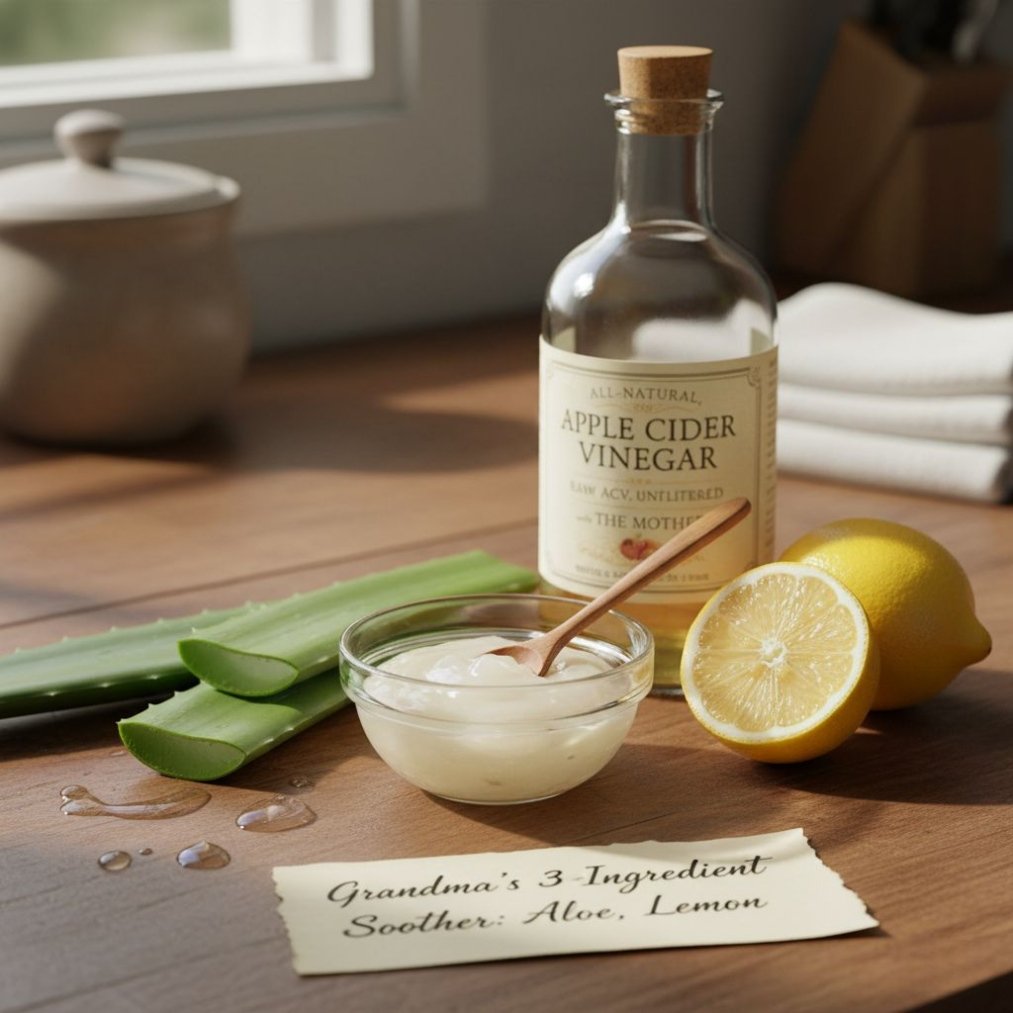
Grandma’s remedies were born from observation, tradition, and using what was available. This recipe is a classic example, combining three ingredients with properties that perfectly target the symptoms of varicose veins.
Let’s break down this “soothing trifecta.”
1. Aloe Vera: The Cooling Hydrator
Why it’s in the recipe: Aloe vera is a legendary healing plant, famously called the “plant of immortality” by ancient Egyptians. Its power lies in its cool, anti-inflammatory gel.
- Soothes Inflammation: Varicose veins are, by nature, inflamed. Aloe vera gel contains compounds like acemannan, which help calm this inflammation on contact, providing immediate cooling relief to hot, achy, and itchy skin.
- Supports Microcirculation: Gently massaging aloe vera into the skin can help stimulate blood flow in the tiny capillaries near the surface. While it won’t “fix” the main vein, it helps refresh the surrounding tissue.
- Deep Hydration: The skin over varicose veins is often stressed, dry, and paper-thin. Aloe’s hydrating properties restore moisture, improve skin elasticity, and relieve the persistent, maddening itch that often comes with venous issues.
2. Apple Cider Vinegar (ACV): The Revitalizing Toner
Why it’s in the recipe: ACV is a hero of folk medicine, long believed to improve circulation and reduce swelling.
- Astringent Properties: ACV is a natural astringent. When applied topically, it can cause tissues to contract, which may help to temporarily tone the skin and improve the appearance of swollen veins. This creates a “tighter,” more revitalized feeling.
- Reduces Puffiness: This astringent action also helps in drawing out excess fluid and reducing the puffiness and “water-logged” sensation in the ankles and calves.
- Boosts Circulation (The Theory): The traditional belief is that ACV helps “detoxify” and break up stagnant blood, improving flow. While the science on this is topical, its toning and stimulating effect on the skin is undeniable, leaving legs feeling lighter and more refreshed.
3. Lemon Juice: The Brightening Protector
Why it’s in the recipe: More than just a fresh scent, lemon is a potent source of two key components for vessel health.
- Vitamin C (Ascorbic Acid): Lemon juice is packed with Vitamin C, which is absolutely essential for the creation of collagen and elastin. These are the two primary proteins that make up the walls of your blood vessels. Stronger, more elastic vessel walls are less likely to stretch and bulge.
- Bioflavonoids (like Hesperidin): Found in the peel and pulp, these powerful antioxidants are known to strengthen capillaries and improve overall vein health. Lemon’s properties help protect your blood vessels from oxidative stress and free radical damage, which contribute to the aging and weakening of veins.
- Skin Brightening: As a bonus, the mild citric acid in lemon juice helps to gently exfoliate and brighten the skin’s tone, which can help with the discoloration that sometimes accompanies varicose veins.
Together, these three ingredients create a synergistic blend that cools inflammation (Aloe), tones and revitalizes (ACV), and strengthens and protects (Lemon).
Grandma’s Step-by-Step Soothing Ritual
This remedy is more than just its ingredients; it’s about the ritual of application. It’s a 20-minute act of self-care that tells your body you are listening to its signals.
What You’ll Need
- 2 tablespoons of pure aloe vera gel (Use gel from a fresh leaf if possible, or a 100% pure store-bought gel without alcohol or color)
- 1 tablespoon of raw, unfiltered apple cider vinegar (The kind “with the mother”)
- Juice of ½ fresh lemon
- A clean, non-metallic bowl
- (Optional) 1-2 drops of peppermint or rosemary essential oil for an extra cooling, circulatory boost.
How to Prepare
- Combine: Place the 2 tablespoons of aloe vera gel into your bowl.
- Mix: Add the 1 tablespoon of apple cider vinegar and the fresh lemon juice.
- Stir: Whisk the ingredients together vigorously until they form a smooth, consistent paste.
- (Optional) Chill: For an incredible cooling effect on hot, tired legs, place the bowl in the refrigerator for 15-20 minutes before applying.
The Art of Application: How to Use It Safely & Effectively
1. ⚠️ CRITICAL FIRST STEP: Do a Patch Test Do not skip this. Both ACV and lemon are acidic and can irritate sensitive skin. Apply a small amount of the mixture to your inner arm. Wait 30 minutes. If you experience any redness, burning, or itching, rinse it off and do not proceed.
2. Cleanse Your Legs Start with clean, dry skin. This allows the mixture to be absorbed properly.
3. Apply the Mixture Scoop up the mixture with your fingers and apply it generously over the affected areas—your calves, ankles, and behind your knees.
4. The All-Important Massage (Gently!) This is the most crucial part.
- DO NOT press or massage directly on top of large, bulging veins. This can put too much pressure on them.
- DO use gentle, sweeping, circular motions on the skin around the veins.
- ALWAYS massage in an upward direction—from your ankles toward your heart. This encourages proper circulation and supports the work your veins are trying to do.
- Continue this gentle massage for 5 to 10 minutes.
5. Let It Rest Once applied, put your feet up. Elevate your legs on a pillow so they are higher than your heart. This allows gravity to help your circulation and gives the mixture time to work. Leave it on for 20-30 minutes. Read a book, listen to a podcast, and just relax.
6. Rinse and Pat Dry Rinse the mixture off with lukewarm or cool water (avoid hot water, which can dilate veins). Gently pat your skin dry with a soft towel.
7. Follow Up You can apply a simple, unscented moisturizer or a bit of plain coconut oil if your skin feels like it needs extra hydration.
For best results, aim to repeat this soothing ritual 3 to 4 times per week.
More Than a Recipe: A Holistic Approach to Leg Health
Grandma’s wisdom didn’t stop at one recipe. It was part of a holistic lifestyle. This topical remedy works best when combined with other simple habits that support your veins from the inside out.
- Elevate Your Legs: This is the easiest and fastest way to get relief. Any time you’re sitting, prop your feet up. Aim for 15 minutes, 3 times a day, with your legs above your heart.
- Keep Moving: Circulation’s worst enemy is being static. If you sit or stand all day, take 5-minute “walking breaks” every hour. Even just flexing your ankles and wiggling your toes at your desk helps pump blood.
- Eat for Your Veins:
- Flavonoids: Eat the rainbow. Berries, cherries, citrus fruits, and leafy greens are full of flavonoids that strengthen vein walls.
- Fiber: Constipation strains your whole system, including your leg veins. Eat plenty of oats, seeds, fruits, and vegetables.
- Consider Compression: Modern compression stockings are a far cry from the old-fashioned ones. They provide gentle, graduated pressure that acts like an external “muscle” to help your veins move blood upward.
Conclusion: A Return to Gentle, Timeless Care
The ache and heaviness of varicose veins are a real burden, but you are not powerless. This 3-ingredient remedy is a beautiful piece of traditional wisdom—a way to find immediate, cooling relief and tangible comfort.
It is not a magic “cure,” but it is a powerful act of self-care.
It’s a commitment to taking 20 minutes for yourself, to soothe your body with natural ingredients, and to honor the signals your legs are sending you. It’s a reminder that sometimes, the most profound comfort can be found in the simplest things—just like grandma always knew.
⚠️Important Medical Disclaimer
This content is for informational and educational purposes only. It is not intended as a substitute for professional medical advice, diagnosis, or treatment. Always consult your doctor or a qualified healthcare provider with any questions you may have regarding a medical condition.
Please see your doctor if:
- Your pain is severe or sudden.
- You develop sores, ulcers, or rashes on your legs.
- A vein becomes hard, hot, and very tender (which could signal a blood clot).
- You experience any bleeding from a vein.
This natural remedy is intended to soothe the symptoms of discomfort, swelling, and heaviness associated with mild varicose veins.